How to choose
Choosing an outdoor setting that actually fits your verandah
Measure the clear floor before you count the seats. A 1.8 metre table needs about 9.72 square metres of deck once you allow 900 mm behind every chair.
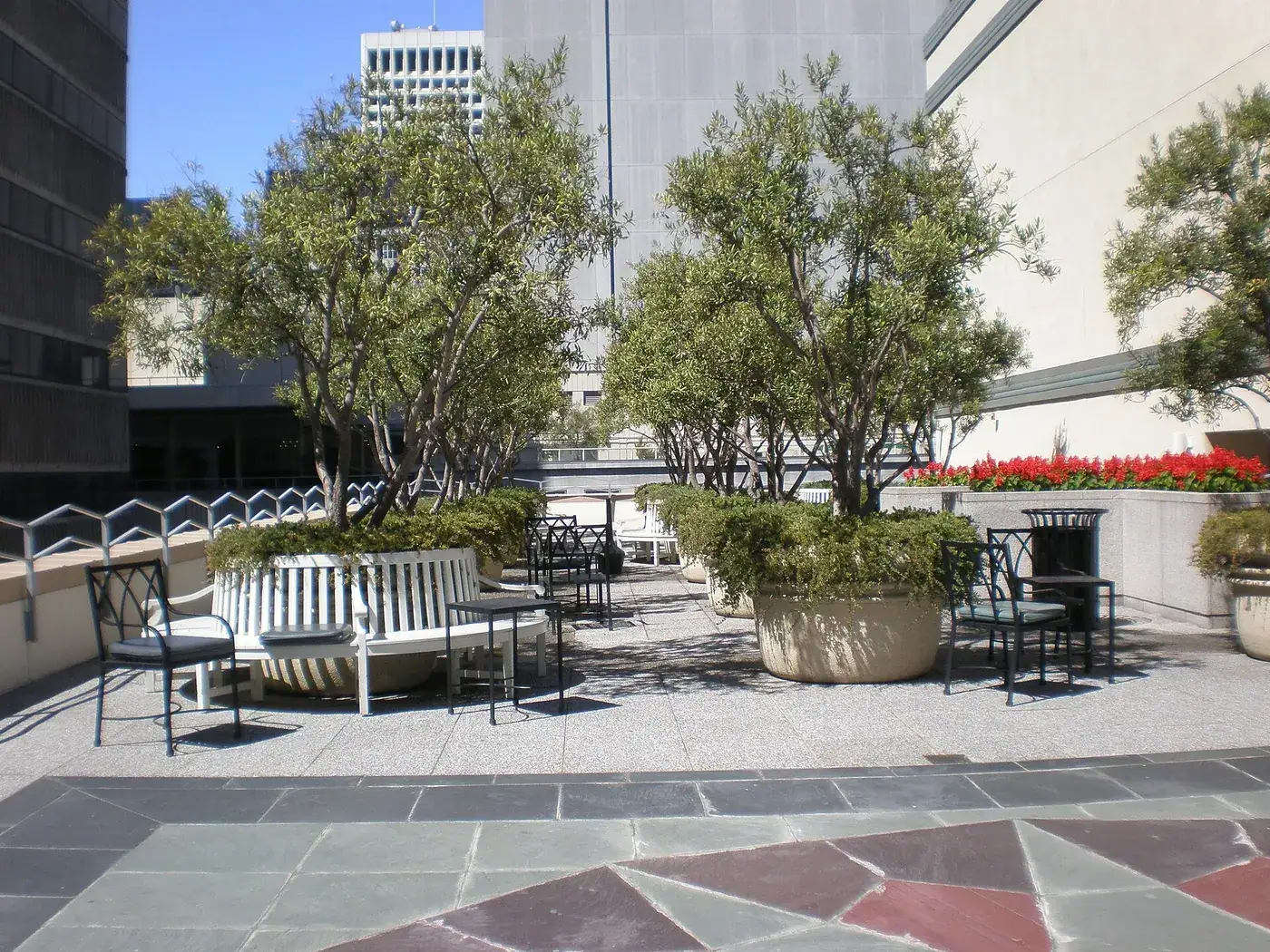
Almost every outdoor setting that disappoints does so for one of two reasons: it fits the floor but not the circulation, or it suits the photograph but not the way the household actually eats outside. Neither problem is visible in a showroom, where the setting stands alone on an open floor with no doorway, no barbecue and no pot plants.
This guide works through the measurements in the order that settles the decision, then the question of how you really use the space. Every price in it is an example checked on 2026-11-03, not a quoted price. This site has no price feed, no reviews and nothing for sale.
Measure the clear floor, not the deck
Clear floor is what is left after the door swing, the barbecue, the clothes airer, the planter boxes and the path people take to reach the back steps. On most Australian verandahs that is between 60% and 75% of the nominal area, and the difference is exactly where the setting fails to work.
Mark it out with painter's tape before you shop. Tape the table footprint on the ground, then tape a 900 mm band around all four sides of it, and walk the route from the back door to the steps. If you have to step over the tape, the setting is too big for the space whatever the showroom floor suggested.
The working allowances are simple: 600 mm of table edge per person, and 900 mm of clear floor behind each chair so it can be pulled out and someone can pass behind it. Tighter than 750 mm and chairs have to be lifted rather than slid; tighter than 600 mm and nobody can walk behind a seated guest at all.
| Table | Seats at 600 mm each | Footprint with clearance | Fits a 4 by 3 m deck |
|---|---|---|---|
| 1.5 by 0.9 m rectangle | 4, or 6 with one at each end | 3.3 by 2.7 m | Yes, with room to pass |
| 1.8 by 0.9 m rectangle | 6, or 8 with one at each end | 3.6 by 2.7 m | Yes, using 81% of the floor |
| 2.4 by 1.0 m rectangle | 8, or 10 with one at each end | 4.2 by 2.8 m | No, 200 mm too long |
| 1.2 m round | 6 | 3.0 by 3.0 m | Yes, with 1 metre spare on the long side |
| 1.5 m round | 7 | 3.3 by 3.3 m | No, 300 mm too deep |
Seat counts on round tables come from the circumference divided by 600 mm. Put your own deck dimensions into the room-fit calculator on this site to see which rows survive once the door swing and the barbecue are subtracted.
Count the meals, not the dinner party
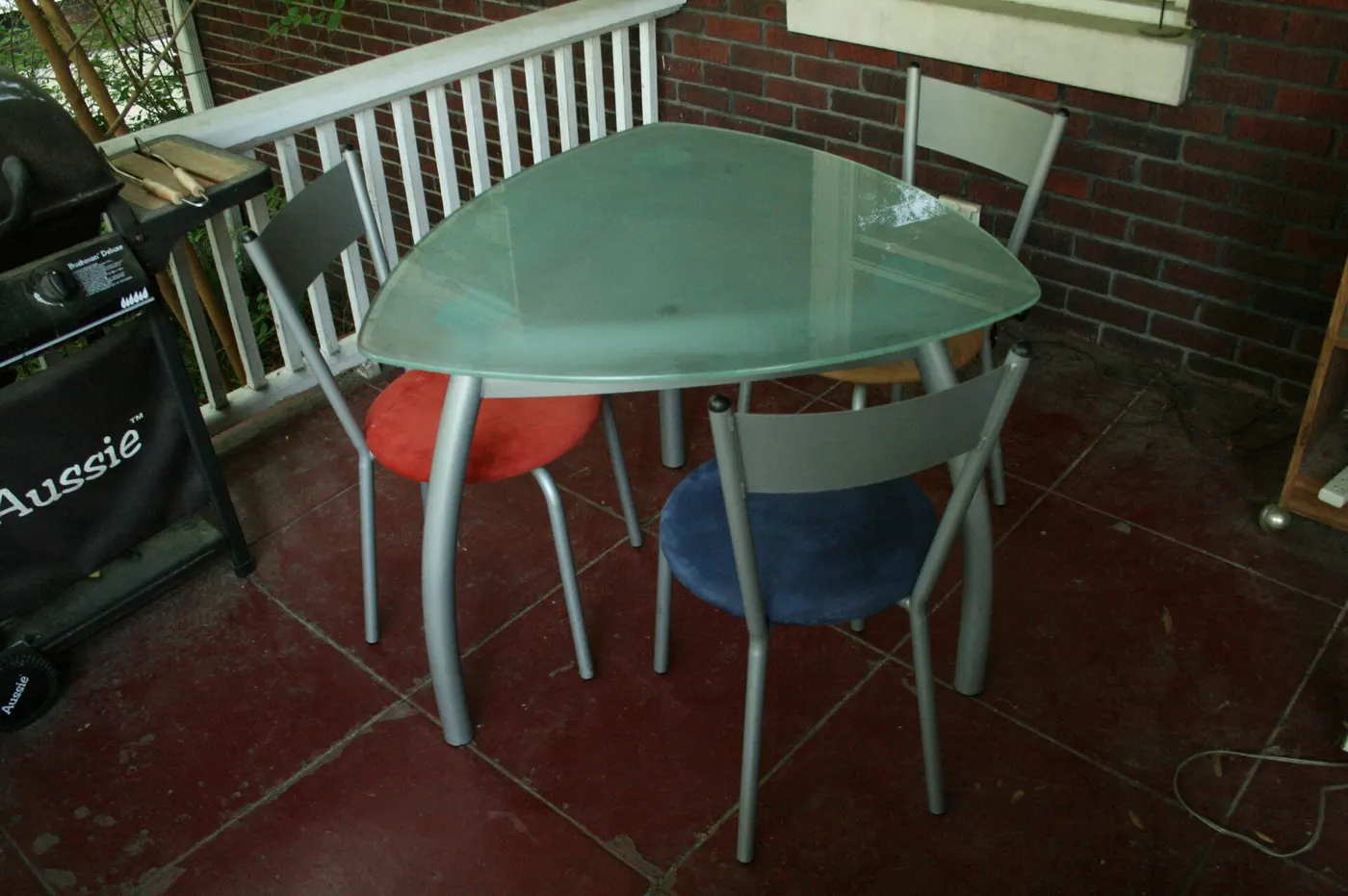
The second mistake is buying for the largest gathering rather than the usual one. A household of 2 people that hosts 8 twice a year is better served by a 1.5 metre table and 4 stackable extra chairs than by a 2.4 metre table that is 60% empty for 363 days.
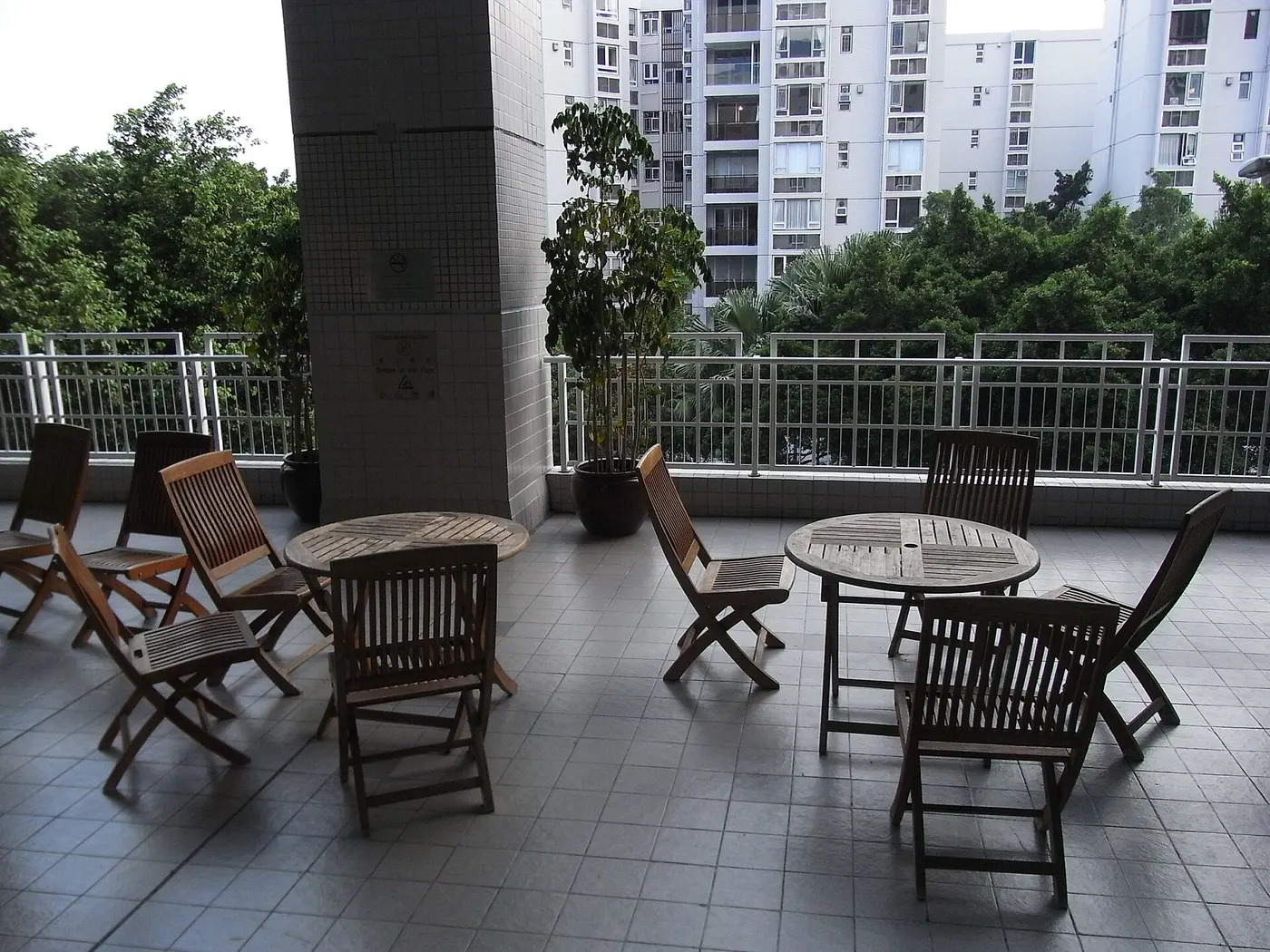
The stackable chair is the part that makes this work. Four folding timber chairs occupy roughly 400 by 600 mm stacked in a corner, which is less floor than one assembled chair in use, and they come out twice a year without dominating the verandah the rest of the time.
Write down how many people sit outside in a typical week and how many times a year you exceed that. If the second figure is under 6 occasions, buy for the weekly number and add seating rather than buying for the annual peak.
- Count the usual number of people who eat outside in a week, not the maximum you have ever hosted
- Stackable or folding chairs store in about 400 by 600 mm for a set of 4
- A bench seats more per metre than chairs but cannot be pulled out, so it needs less clearance behind
- Extending tables add 400 to 600 mm of length and need the same 900 mm clearance at full extension
- Leave the barbecue a 1 metre working zone that no chair ever enters
Shade decides whether the setting is used at all
An uncovered setting in an Australian summer is usable before about 10 am and after about 5 pm, which is a small share of the hours you paid for. Shade changes that more than any upgrade in the furniture itself, and it is usually the cheaper half of the problem to solve.
A cantilever umbrella clears the table and needs a base weighted for wind, which on an exposed deck is the part people under-buy. A fixed pergola or a shade sail removes the base problem but fixes the position, so measure where the sun actually lands at 1 pm in January before you place it, rather than where it lands when you happen to be standing there.
Budget order matters here. On a $2,000 total, roughly $1,400 of furniture and $600 of shade is used more hours a year than $2,000 of furniture and no shade. That is a planning allocation rather than a rule, and the point is that the shade line should not be the remainder.
| Option | Example cost | Takes floor space | Moves with the sun |
|---|---|---|---|
| Centre-pole market umbrella | $180 to $400 | Yes, the pole sits in the table | Tilts only |
| Cantilever umbrella and weighted base | $600 to $1,200 | Yes, base is about 900 by 900 mm | Rotates and tilts |
| Shade sail | $300 to $900 | No | No |
| Fixed pergola or roof | $3,000 and up | Posts only | No |
Example bands, not offers. A cantilever base heavy enough for an exposed site is frequently a third of that option's total cost and is the item most often left out of a quote.
What the law gives you when a setting fails
Consumer Affairs Victoria sets out the guarantees that apply automatically to products: acceptable quality, matching the description or sample, fitness for purpose, title and possession, and repairs and spare parts. A person or business counts as a consumer when buying products or services costing up to $100,000, a figure that was $40,000 for purchases made before 1 July 2021.
Acceptable quality includes being durable, which is the guarantee that matters for furniture left in the weather. A powder-coated frame that corrodes through in its second summer is not a weather problem; it is a durability question under the automatic guarantee, and the remedy sits with the seller rather than the manufacturer.
Keep the receipt and a photograph of the setting on the day it arrived. Those two items turn a durability argument into a short conversation, and they cost nothing to produce at the time.
- Tape out the table footprint plus a 900 mm band and walk the route to the back steps
- Subtract the barbecue zone, the door swing and the planters before counting the remaining floor
- Pick the table from the weekly number of people, then add stackable chairs for the peak
- Price the shade at the same time as the furniture, not afterwards
- Photograph the setting on arrival and file the receipt with the photograph
Before you buy
- Measure the clear floor after subtracting door swing, barbecue zone and planters
- Tape out the table footprint plus 900 mm on all four sides
- Allow 600 mm of table edge per person when counting seats
- Decide the table size from the weekly number, not the annual peak
- Price the shade and its base in the same budget as the furniture
- Confirm the seller trades in Australia so the automatic consumer guarantees apply
- Photograph the setting on arrival and keep the receipt with it
Questions readers ask
- How much clearance do I really need behind a chair?
- Allow 900 mm from the table edge to the nearest obstruction. That lets a chair be pulled out and a person pass behind it. At 750 mm the chair comes out but nobody squeezes past, and at 600 mm the chair has to be lifted clear of the table. On a narrow verandah a bench against the wall removes the problem entirely.
- Is a round or rectangular table better for a small deck?
- Round wins for conversation and loses for floor efficiency. A 1.2 metre round seats 6 and needs a 3.0 by 3.0 metre square of floor; a 1.8 by 0.9 metre rectangle seats the same 6 in 3.6 by 2.7 metres and can sit against a wall on its long side, which a round table cannot do without wasting the seats behind it.
- Should I buy an extending table instead of a larger one?
- Only if you have the clearance at full extension. An extending table adds 400 to 600 mm of length and still needs 900 mm behind the end chairs, so the footprint in the table above grows by the same amount. If the deck cannot take the extended footprint, four folding chairs and a smaller fixed table solve the same problem for less money.
- Does a cover change how long a setting lasts?
- It changes how long the cushions and the finish last rather than the frame. A cover at about $120 replaced every 3 years costs $40 a year, which is small against a cushion set at about $260 every 5 years. The cover earns its place mainly by keeping cushions dry enough to avoid mildew between uses.
- What size umbrella suits a 1.8 metre table?
- A canopy of about 3 metres across covers a 1.8 by 0.9 metre table and the chairs around it at the hours either side of noon. Anything smaller shades the table and not the people. A cantilever of that size needs a base of roughly 900 by 900 mm, which has to be included in the floor plan rather than added afterwards.
Sources
- Consumer Affairs Victoria — consumer guarantees that apply automatically, including the $100,000 consumer threshold — checked 2026-11-03
- Standards Australia — how Australian Standards are purchased, subscribed to or read in the public access reader room — checked 2026-11-03
- Australian Bureau of Statistics — Monthly Household Spending Indicator, August 2026 (furnishings and household equipment down 0.6% in the month) — checked 2026-11-03
Some links on this site can earn us a commission. That does not change which product a guide recommends, and it adds nothing to your price. Advertising is not enabled on this site yet. When it is, ads will be labelled and kept visually separate from the guides.